
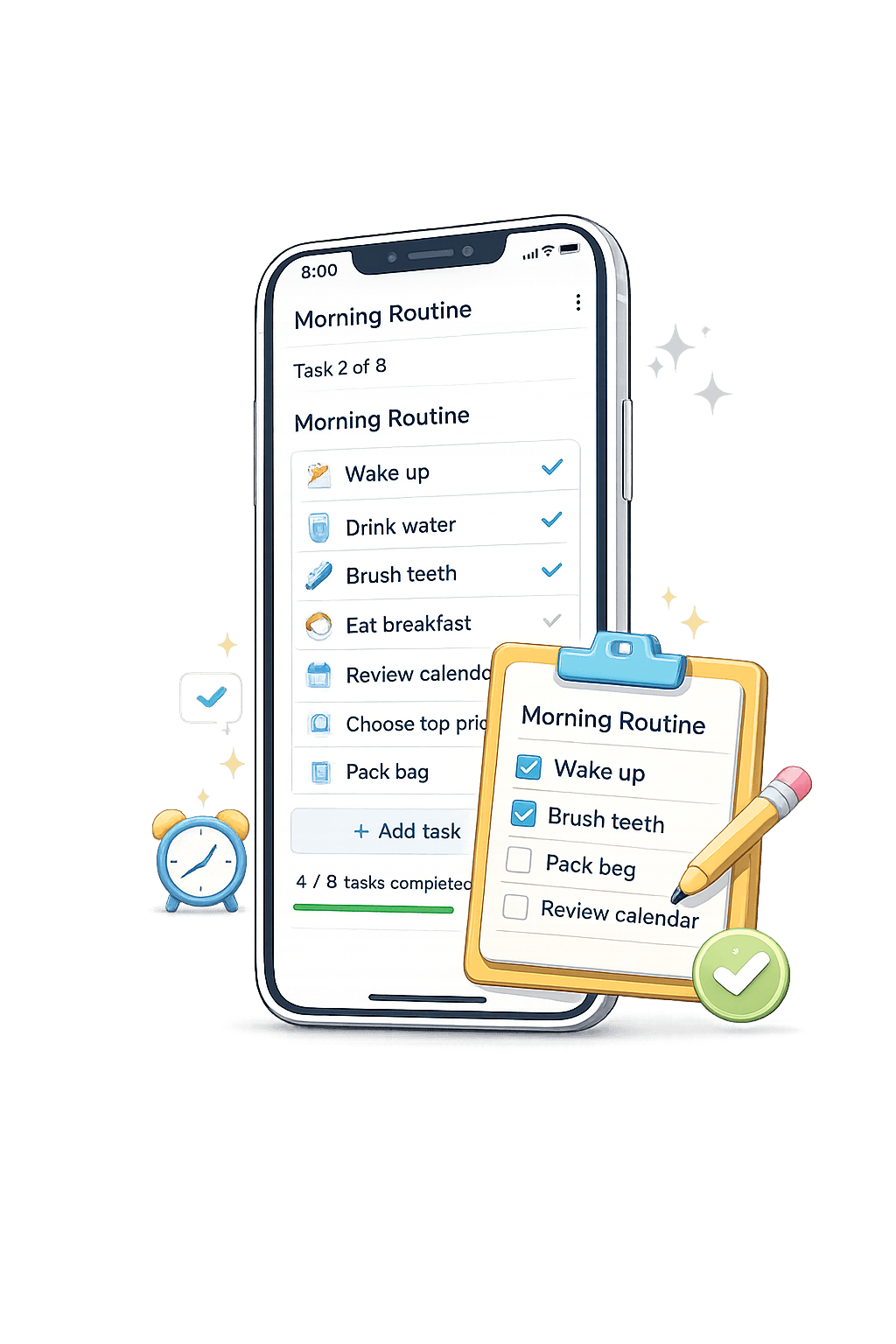
6 tasks selected. Only these tasks will be saved.
Your checklist
6 tasks selected
Wake up
Pack lunch or snacks
Eat breakfast
Make coffee or tea
Do light stretching
Choose your top priorities
Choose more tasks
Add optional tasks to your routine.
Start
Open curtains or get light
Make the bed
Start music or a podcast
Start a routine timer
Health
Drink water
Take vitamins or supplements
Take medication
Hygiene
Use the bathroom
Brush teeth
Wash face
Shower
Do skincare
Hair, shave, or grooming
Get ready
Get dressed
Check the weather
Pack your bag
Prepare gym bag
Charge or pack devices
Check commute or departure time
Food
Check meal plan
Movement
Take a short walk
Do quick exercise
Mindset
Do a breathing reset
Meditate or sit quietly
Journal briefly
Note one thing you appreciate
Set an intention for the day
Read a short section
Planning
Review your calendar
Review today’s task list
Review habit goal
Plan your first work block
Avoid inbox until routine is done
Check planned spending
Home
Tidy one small area
Empty or load dishes
Start a load of laundry
Take out trash
Feed pet
Water plants
Finish
Leave or start work on time
Start your first important task
Reset anything left open
Check keys, wallet, and essentials
Final mirror or readiness check
Focus
Keep phone away until ready
Work
Prepare your workspace
Morning Routine Checklist task instructions
Wake up
Start the routine when you are actually out of bed.
Open curtains or get light
Let natural light help signal the start of the day.
Make the bed
Keep it simple - reset the room before moving on.
Start music or a podcast
Optional mood-setting step while getting ready.
Start a routine timer
Helps keep the morning from expanding too much.
Drink water
Have a glass of water before coffee or breakfast.
Take vitamins or supplements
Optional personal step if relevant to you.
Take medication
Optional personal step. Use only if this applies to you.
Use the bathroom
Basic bathroom step before grooming.
Brush teeth
Keep this as a fixed daily step.
Wash face
A quick refresh before starting the day.
Shower
Include this if it belongs in your normal morning.
Do skincare
Keep the routine short enough to repeat.
Hair, shave, or grooming
Add whatever helps you feel ready to leave or work.
Get dressed
Choose clothes for the day.
Check the weather
Useful before choosing clothes, shoes, or a jacket.
Pack your bag
Pack work, school, gym, or daily essentials.
Prepare gym bag
Pack workout clothes, shoes, towel, bottle, or anything else you need.
Charge or pack devices
Check your phone, laptop, tablet, watch, earbuds, or charger.
Check commute or departure time
Confirm when you need to leave.
Pack lunch or snacks
Prepare food to take with you.
Check meal plan
Check what you plan to eat today or what needs to be prepared.
Eat breakfast
Keep it practical and repeatable.
Make coffee or tea
Add this if it is part of your morning rhythm.
Do light stretching
A short mobility reset, not a full workout.
Take a short walk
Get moving before work or study if time allows.
Do quick exercise
Short bodyweight, cardio, or mobility block.
Do a breathing reset
A short pause before the day starts.
Meditate or sit quietly
Keep it short if consistency matters.
Journal briefly
Write a few lines about your day, mood, or plan.
Note one thing you appreciate
A small reflective step, not a long writing session.
Set an intention for the day
One sentence about how you want to approach the day.
Read a short section
Optional quiet input before starting the day.
Review your calendar
Check appointments, calls, school, or travel time.
Choose your top priorities
Pick 1-3 important things for the day.
Review today’s task list
Look at the tasks you already planned.
Review habit goal
Check the habit or routine goal you are trying to keep consistent.
Plan your first work block
Decide what you will start with before opening distractions.
Avoid inbox until routine is done
Keep email and messages from taking over the morning.
Check planned spending
Optional step for people managing daily expenses.
Tidy one small area
Clear one surface, sink, or table. Keep it short.
Empty or load dishes
Small home reset if it fits your morning.
Start a load of laundry
Optional home task for slower mornings.
Take out trash
Handle it before leaving or starting the day.
Feed pet
Add this if you care for a pet in the morning.
Water plants
Optional home care step.
Leave or start work on time
End the routine with a clear transition.
Start your first important task
Use this if your morning ends at your desk.
Reset anything left open
Put away items, close tabs, or clear the immediate mess.
Check keys, wallet, and essentials
Prevent last-minute searching before leaving.
Final mirror or readiness check
Quick final check before leaving or starting work.
Keep phone away until ready
Avoid scrolling before the core routine is done.
Prepare your workspace
Clear desk, open tools, or prepare notebook.
Build a Morning Routine You Can Actually Follow
A morning routine works best when it is specific enough to follow, but flexible enough to survive real mornings. This builder helps you create a practical morning routine from a preset checklist, then adjust it around how you actually start the day.
Instead of staring at a blank page, you can begin with a ready-made morning routine checklist, remove steps that do not fit, add tasks from the available list, adjust durations, and save the result. The goal is not to copy someone else's perfect morning. The goal is to build a routine that gives you a clear sequence from waking up to leaving home or starting your first task.
This page is designed for people searching for a morning routine list, a morning routine checklist, or help deciding what should be in a morning routine. The builder gives you a concrete starting point and lets you turn that list into something reusable.
Why Build Your Morning Routine in Checklist?
A morning routine is usually not one habit. It is a sequence of small steps: wake up, get light, drink water, brush teeth, get dressed, eat breakfast, check the day, and start moving. A normal todo list can hold those steps, but it does not always make the routine feel repeatable.
Checklist is useful here because the routine can become more than a static list. You can save your morning routine, edit it later, run it step by step, and reuse it when your day repeats. If you want a quick version for rushed mornings, you can build that too. If you want a slower version for calm mornings, the same builder supports that without needing a separate app or planner.
After saving, Checklist can help you use the routine as a reusable template, a scheduled routine, or a one-time checklist session. That keeps the builder simple while still giving you different ways to use the routine once it is created.
What Should Be in a Morning Routine?
A good morning routine usually includes a few practical categories rather than a long list of random habits.
- Start: wake up, open curtains, get light, drink water
- Hygiene: bathroom, brush teeth, wash face, shower, grooming
- Get ready: get dressed, check weather, pack a bag, prepare devices
- Food: breakfast, coffee or tea, lunch, snacks, meal plan
- Movement: stretching, short walk, quick exercise
- Planning: review calendar, choose priorities, review tasks
- Home reset: make bed, tidy one small area, dishes, pet care
- Finish: check keys and wallet, leave on time, or start your first task
You do not need every category every morning. A useful morning routine checklist should include the steps you need most days and a few optional tasks you can add when they fit.
Start From a Preset, Then Make It Yours
The presets are meant to give you a useful starting shape. Each one selects a different set of tasks from the same morning routine task pool.
- Simple Morning Routine: a balanced everyday routine with basic hygiene, food, planning, and a clear finish.
- Quick Morning Routine: a shorter checklist for busy mornings when you need only the essentials.
- Productive Morning Routine: a work-focused routine that adds calendar review, priorities, workspace prep, and a first work block.
- Healthy Morning Routine: a longer routine with light, water, movement, breakfast, and simple health-oriented tasks.
- Calm Morning Routine: a slower start with breathing, journaling, skincare, coffee or tea, and a light review of the day.
The preset is not the final answer. It is the first draft. If a task does not fit your morning, remove it. If something important is missing, add it from the task list or create a custom task.
Example Morning Routine Checklist Structure
If you are looking for a simple morning routine list, start with a structure rather than a perfect set of tasks. A basic morning routine checklist can follow this order:
- Start the day
- Handle hygiene
- Get dressed and ready
- Eat or prepare food
- Check the day ahead
- Choose what matters most
- Leave or start work on time
This structure answers the practical question of what should be in a morning routine without forcing the same task list on everyone. For one person, the food step may be breakfast. For another, it may be coffee only. For someone working from home, the final step may be preparing a workspace. For someone commuting, it may be checking keys, wallet, bag, and departure time.
The builder keeps the actual tasks editable so the routine can match your day instead of becoming a generic morning routine template you never use.
Add Duration Without Turning It Into a Schedule
Morning routines often fail because they quietly become too long. A checklist with durations makes the total routine easier to judge before you save it.
Use duration as a practical guide, not a strict calendar. A quick routine may be around 10 to 15 minutes. A normal routine may be closer to 20 to 35 minutes. A healthy or calm routine can take longer if you intentionally include stretching, journaling, breakfast, or quiet time.
The useful question is not whether the routine looks impressive. The useful question is whether you can repeat it on a normal morning.
Morning Routine Ideas You Can Add
Use optional tasks to make the routine fit your situation. Keep the core checklist stable, then add only the extras that make the morning better.
- For a more focused morning: review your calendar, choose top priorities, prepare your workspace, plan your first work block.
- For a faster morning: start a timer, keep only hygiene and get-ready steps, check essentials before leaving.
- For a healthier morning: drink water, get light, stretch, take a short walk, prepare breakfast, check your meal plan.
- For a calmer morning: breathing reset, short journaling, music, skincare, tidy one small area.
- For leaving home: check weather, pack your bag, charge or pack devices, confirm keys and wallet.
These ideas are not meant to all go into one routine. Pick the few that support the kind of morning you want.
App, Planner, Template, or Printable?
A printable morning routine chart can be useful when you want a visual reminder on a wall or desk. A planner is useful when the morning is built around time blocks. A habit tracker is useful when you mainly care about whether a habit was done.
A checklist is better when your morning routine is a sequence of steps you want to follow in order. A digital checklist is especially useful when you want to edit the routine, save different versions, reuse it, or schedule it later.
This builder sits between a static morning routine template and a full niche routine app. You get a structured starting point, but the final routine is still yours.
Save, Run, and Repeat
Saving the routine matters because mornings repeat. Once you have a checklist that works, you should not need to rebuild it from scratch.
After saving, you can decide how to use the routine: keep it as a reusable template, schedule it for repeated use, or run it once as a checklist. You can also adjust it later when your morning changes.
This is useful for workdays, slower mornings, travel days, or any situation where you want a different version of your normal routine. The builder gives you the first version. Repeating and improving it makes it useful.
Who This Builder Is For
This morning routine builder is for people who want a clear checklist, not a complicated system. It works well if you want to stop improvising your morning, reduce forgotten steps, create a repeatable workday start, or keep a shorter backup routine for busy days.
It is also useful if you have tried morning routine ideas from articles, videos, planners, or printables and want to turn those ideas into an actual checklist you can use.
Start With a Preset or Build Your Own
The easiest way to begin is to choose the preset closest to your real morning. Use the selected tasks as your starting checklist, then add or remove tasks until the routine feels practical.
If none of the presets fit, use the task list as a menu of morning routine ideas and build your own version. Once it looks right, save it and decide whether to run it once, keep it as a template, or schedule it as a repeating routine.