
Daily To Do List
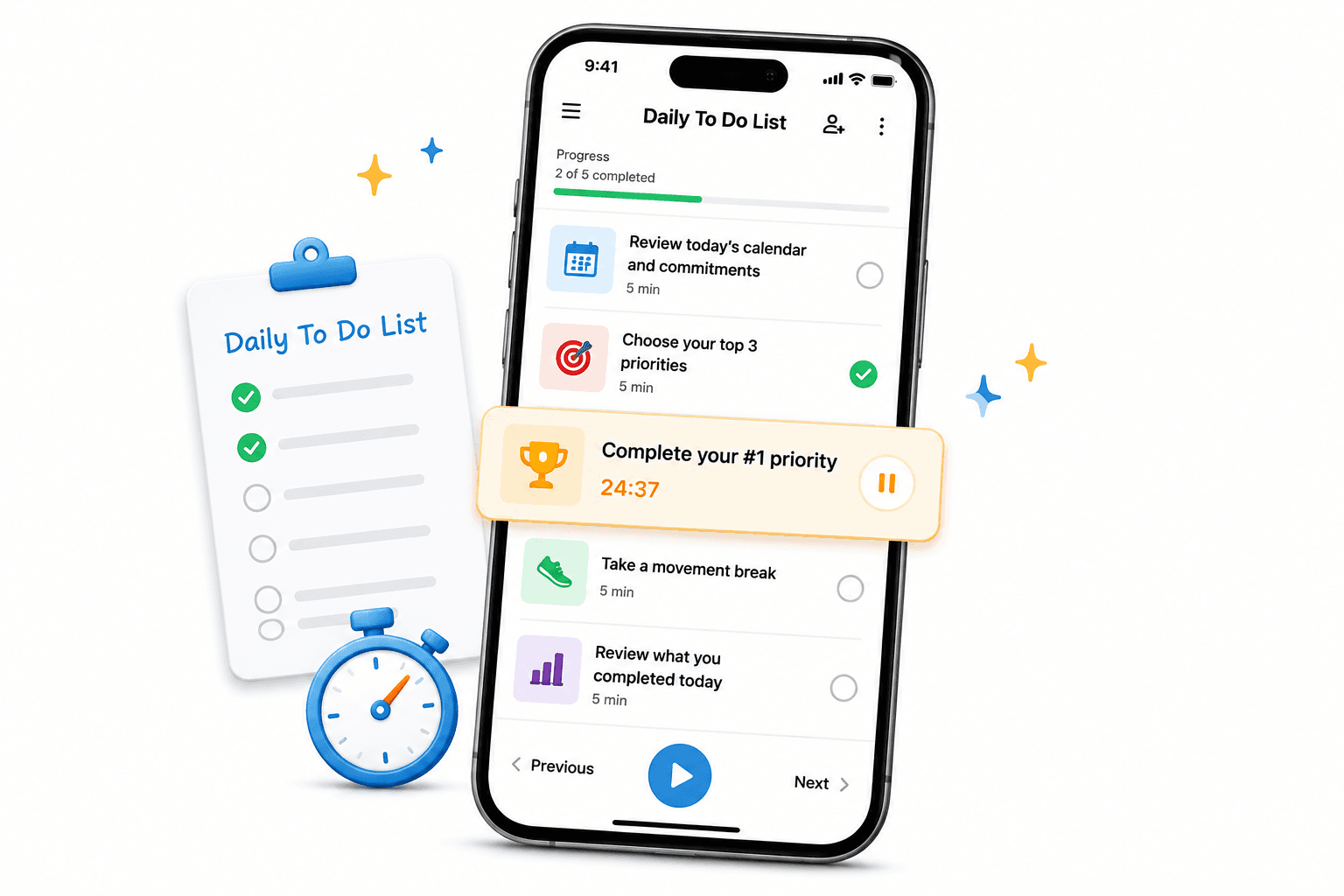
5 tasks selected. Only these tasks will be saved.
Your checklist
5 tasks selected
Review today’s calendar and commitments
Choose your top 3 priorities
Complete your #1 priority
Take a movement break
Review what you completed today
Choose more tasks
Add optional tasks to your routine.
Start Your Day
Get up at your planned time
Make the bed
Open the curtains and get some daylight
Drink a glass of water
Brush your teeth
Plan & Prioritize
Pick your #1 must-do task
Review your existing to-do list
Capture anything else you need to remember
Break a big task into smaller next steps
Estimate how long important tasks will take
Work & Productivity
Start with your most important work task
Complete a focused work block
Make progress on your main project
Prepare for meetings
Attend scheduled meetings or calls
Study & Learning
Check today’s class or study schedule
Review upcoming deadlines
Attend class, lecture or training
Complete a focused study session
Work on an assignment or project
Health & Movement
Go for a walk
Do a workout
Stretch or do mobility work
Spend some time outdoors
Go for a run or jog
Food & Hydration
Eat breakfast
Drink water regularly
Eat lunch
Eat dinner
Prepare a meal
Home & Cleaning
Wash dishes or load the dishwasher
Tidy one room
Put things back where they belong
Take out the trash
Do a quick home reset
Errands & Getting Around
Run one important errand
Buy groceries
Go to an appointment
Handle a pickup or drop-off
Check your route, traffic or transit
Money & Life Admin
Pay a bill
Check your bank balance
Book or manage an appointment
Finish one admin task you have been avoiding
Record or review today’s spending
Family, Friends & Pets
Check in with your partner or family
Spend focused time with family
Check in with a friend
Call someone important to you
Reply to personal messages
Messages & Digital Life
Check important messages
Check email intentionally
Reply to important email
Return missed calls
Process your inbox
Personal Time & Growth
Read a book or article
Take some deliberate downtime
Spend time on a hobby
Write or journal
Do something just for fun
End Your Day
Move unfinished tasks to another day
Choose tomorrow’s top priorities
Check tomorrow’s calendar
Capture any loose ends
Prepare tomorrow’s clothes
Daily To Do List task instructions
Get up at your planned time
Start the day when you intended to. Avoid repeated snoozing if you can.
Make the bed
A quick reset that makes the room feel more orderly.
Open the curtains and get some daylight
Natural light soon after waking can help you feel more alert.
Drink a glass of water
Rehydrate after sleeping.
Get dressed
Choose clothes that fit what you have planned for the day.
Check the weather
Look at temperature and rain before deciding what to wear or carry.
Pack what you need for the day
Include anything needed for work, school, appointments, or exercise.
Grab your keys, phone and payment card
A quick essentials check before leaving.
Leave on time
Work backward from when you need to arrive, including travel buffer.
Review today’s calendar and commitments
Check meetings, appointments, deadlines, travel time, and anything fixed before planning the rest of the day.
Choose your top 3 priorities
Pick the three outcomes that would make today feel successful.
Pick your #1 must-do task
If only one important thing gets done today, decide what it should be.
Complete your #1 priority
Protect enough uninterrupted time to move your most important task to done.
Review your existing to-do list
Look for overdue, urgent, or quick tasks that need a decision today.
Capture anything else you need to remember
Get loose thoughts out of your head and into one trusted list.
Break a big task into smaller next steps
Make the next action concrete enough that you can start without further planning.
Estimate how long important tasks will take
Rough estimates are enough; the goal is to avoid planning more than fits.
Time-block focused work
Reserve calendar time for work that is easy to postpone when the day gets busy.
Set reminders for time-sensitive tasks
Use reminders for things that must happen at or before a specific time.
Move nonessential tasks to another day
Keep today realistic instead of carrying an impossible list.
Delegate something someone else can do
Include the expected outcome and when you need it back.
Decide what “done” looks like for your main task
A clear finish line makes it easier to stop polishing and move on.
Start with your most important work task
Do meaningful work before lower-value activity consumes the day.
Complete a focused work block
Silence distractions and work on one defined task for a set period.
Make progress on your main project
Choose one concrete deliverable or milestone to advance today.
Prepare for meetings
Review the agenda, desired outcome, and anything you need to bring or decide.
Follow up on meeting action items
Capture owners, deadlines, and next actions while the discussion is still fresh.
Process urgent email
Handle messages that are both important and time-sensitive; leave the rest for a planned email block.
Complete one administrative task
Clear one piece of necessary admin before it becomes tomorrow’s problem.
Review a document or proposal
Read with a specific goal: approve, edit, decide, or provide feedback.
Update project status or metrics
Record progress so you and others know what changed and what is next.
Delegate or assign next actions
Give enough context, ownership, and a deadline to avoid unnecessary back-and-forth.
Organize your desk or workspace
Remove obvious clutter and leave the tools you actually need.
Close unnecessary tabs and distractions
Reduce visual and notification clutter before your next focus block.
Shut down work intentionally
Review open loops, note the next action for tomorrow, then stop working.
Check today’s class or study schedule
Know where you need to be and what you need to prepare before the day gets busy.
Review upcoming deadlines
Look a few days ahead so assignments do not become last-minute emergencies.
Complete a focused study session
Study one defined topic without switching between unrelated subjects.
Work on an assignment or project
Choose a concrete section, problem set, or deliverable to finish.
Read assigned material
Read actively: highlight key ideas or note questions instead of only turning pages.
Review your notes
Condense the most important ideas and mark anything you do not yet understand.
Practice problems or exercises
Prioritize active practice over rereading when the subject allows it.
Make or review flashcards
Keep cards focused on one fact, concept, or prompt.
Quiz yourself on what you learned
Try recalling the answer before looking it up.
Ask a teacher, tutor or classmate for help
Bring a specific question and show where you got stuck.
Learn something new outside your coursework
Follow curiosity without turning it into another obligation.
Organize your study files
Rename and file loose notes or downloads so you can find them later.
Prepare books and materials for tomorrow
Pack what you need and check whether anything must be charged, printed, or submitted.
Take a movement break
Stand up, walk around, or loosen up for a few minutes after a long period of sitting.
Go for a walk
Even a short walk counts; choose a duration that fits the day.
Do a workout
Use the workout you already planned rather than spending time deciding what to do.
Stretch or do mobility work
Focus on areas that feel stiff from sitting, training, or daily activity.
Spend some time outdoors
Combine this with a walk, lunch break, or errand if your day is full.
Stand up and move regularly
A few minutes of movement is better than waiting for one perfect workout window.
Do a short breathing or relaxation exercise
Use a simple technique you already know; the goal is to slow down, not perform it perfectly.
Take prescribed medication
Follow the instructions given for your medication.
Attend or schedule a health appointment
If you have been postponing a needed appointment, use this task to get it booked.
Rest if your body needs recovery
Choose recovery when pushing harder would make the next day worse.
Track your activity or steps
A quick check can help you decide whether to add a walk later.
Do a sport or active hobby
Pick something enjoyable enough that movement does not feel like another chore.
Drink water regularly
Keep water within reach if you tend to forget.
Prepare a meal
Choose something realistic for the time and ingredients you have.
Pack lunch or snacks
Prepare them ahead if buying food tends to derail your schedule.
Eat some fruit or vegetables
Add them to a meal or snack rather than treating this as a separate project.
Take a proper meal break away from work
Step away from your desk if possible and give yourself a real break.
Plan tomorrow’s meals
Decide only what needs deciding: meals, shopping, or prep.
Prep ingredients for later
Wash, chop, thaw, or portion anything that will save time later.
Clean up after eating
Do the minimum reset that keeps the kitchen ready for the next meal.
Tidy one room
Choose one visible area and stop when the set time is up.
Put things back where they belong
Focus on items already out rather than starting a deep organization project.
Do a quick home reset
Spend a few minutes returning the main living areas to a usable state.
Do a load of laundry
Start a load early enough that you can move it before forgetting.
Sweep or vacuum the floors
Prioritize high-traffic areas if you do not have time for the whole home.
Clean the bathroom
A quick clean can be sink, toilet, mirror, and obvious surfaces.
Water houseplants
Check the soil first rather than watering automatically.
Handle a small home repair
Pick one fix you can realistically finish today.
Lock doors and windows
Do a final security check before leaving or going to bed.
Run one important errand
Choose the errand with the biggest consequence if it keeps being delayed.
Buy groceries
Use a list so the trip stays focused and you avoid repeat visits.
Go to an appointment
Check the location, travel time, and anything you need to bring.
Handle a pickup or drop-off
Confirm timing and location before you leave.
Check your route, traffic or transit
Look shortly before leaving so you can adjust for delays.
Make a shopping or errands list
Group stops by location to reduce unnecessary travel.
Pick up a prescription
Check opening hours and whether it is ready before making a special trip.
Mail or post something
Have the address, packaging, and any required documents ready.
Fuel or charge your vehicle
Do it before the level becomes an inconvenience tomorrow.
Return or exchange an item
Bring the item, receipt or order details, and required packaging.
Buy household supplies
Add low-stock essentials to one list instead of making separate trips.
Leave enough time for your commute
Include parking, transfers, walking, and a small delay buffer.
Pay a bill
Handle anything due soon enough to avoid fees or service interruptions.
Check your bank balance
Look for unexpected transactions or upcoming cash needs rather than checking compulsively.
Book or manage an appointment
Get the date into your calendar immediately after booking.
Finish one admin task you have been avoiding
Pick one small, concrete piece of bureaucracy and close it.
Record or review today’s spending
A quick review is enough; flag anything unusual or easy to cut.
Review upcoming bills or payments
Look ahead far enough to avoid surprises.
Transfer money or move savings
Use the plan you already decided instead of reacting to short-term noise.
File or scan paperwork
Give each document a clear name and home so you can find it later.
Complete a form
Gather required information first so you can finish it in one sitting.
Review a recurring subscription
Keep it only if you still use it enough to justify the cost.
Cancel something you no longer use
Do not leave the final cancellation step for another day.
Handle an insurance or account task
Write down confirmation numbers or next steps if the issue is not resolved immediately.
Organize receipts
Keep only what you may need for returns, taxes, warranty, or reimbursement.
Sign or respond to a document
Read what needs attention, complete the required action, and return it.
Check in with your partner or family
Give the conversation real attention rather than combining it with another task.
Spend focused time with family
Choose an activity where you can be present instead of only sharing the same room.
Check in with a friend
A short genuine message is enough if you have been meaning to reconnect.
Call someone important to you
Make the call you keep thinking about rather than waiting for the perfect time.
Reply to personal messages
Prioritize messages where someone is actually waiting on you.
Help a child with school or homework
Help them understand or organize the work rather than simply doing it for them.
Prepare children for school or activities
Check clothes, equipment, food, forms, and timing.
Handle a family pickup or drop-off
Confirm the time and location, especially if plans changed.
Review family plans and logistics
Check tomorrow as well as today for transport, appointments, school, or activities.
Thank or appreciate someone
Be specific about what you appreciated.
Give your pet medication if needed
Follow the dosage and schedule provided for your pet.
Check in on someone who depends on you
Make sure there is nothing urgent they need from you today.
Check important messages
Look for messages that affect today’s plans before scrolling through everything else.
Check email intentionally
Open email with a purpose and a time limit instead of leaving it running all day.
Reply to important email
Prioritize messages blocking another person or a time-sensitive decision.
Process your inbox
Delete, archive, reply, delegate, or turn messages into tasks.
Clear or review notifications
Keep only notifications that are actually useful.
Organize important files
Focus on documents you actively need rather than trying to reorganize everything.
Back up important work or photos
Make sure irreplaceable files exist in more than one place.
Download or save files you will need later
Rename them clearly when the original file name is meaningless.
Update an app or device when needed
Do this when you have enough time for a restart or unexpected delay.
Mute distracting notifications
Keep calls or alerts from people and services that genuinely need immediate access.
Put your phone away during focus time
Move it out of reach if you keep checking it automatically.
Review calendar invitations
Accept, decline, or suggest another time instead of leaving invitations unresolved.
Delete or archive digital clutter
Clean one obvious area such as downloads, screenshots, or old messages.
Send or share something you promised
Close the loop rather than carrying the reminder into another day.
Read a book or article
Choose something you actually want to read, not only something you think you should read.
Take some deliberate downtime
Rest without automatically filling the break with work or errands.
Spend time on a hobby
Protect a little time for something you enjoy for its own sake.
Write or journal
A few honest sentences are enough; this does not need to become an essay.
Do something just for fun
Choose something enjoyable with no productivity requirement.
Meditate
Use a simple practice you can repeat consistently.
Write down something you are grateful for
Make it specific to today rather than repeating the same general answer.
Learn something new
Follow one question or skill instead of opening ten new topics.
Practice a language
Use active recall, conversation, listening, or writing rather than only passive review.
Practice a musical instrument
Pick one piece, technique, or passage to work on.
Make or create something
Write, draw, build, cook, photograph, or make anything tangible.
Watch a show or movie intentionally
Choose what you want to watch before opening an endless feed.
Plan something you are looking forward to
Book it, invite someone, or add a concrete next step.
Review what you completed today
Notice what moved forward before focusing on what is still unfinished.
Move unfinished tasks to another day
Reschedule deliberately instead of carrying an ambiguous overdue list.
Choose tomorrow’s top priorities
Give tomorrow a starting point without planning every minute.
Check tomorrow’s calendar
Look for early starts, travel, meetings, appointments, or preparation needed tonight.
Capture any loose ends
Write down anything your brain is trying to keep active overnight.
Prepare tomorrow’s clothes
Include anything special for weather, work, school, exercise, or an event.
Pack your bag for tomorrow
Add chargers, documents, keys, equipment, and anything easy to forget.
Set your alarm
Confirm both the wake-up time and that the alarm is enabled.
Put your phone away
Charge it away from the bed if late-night scrolling is a problem for you.
Wind down with a quiet activity
Choose something low-stimulation that helps you transition toward sleep.
Go to bed at your planned time
Treat bedtime as an appointment when tomorrow depends on being rested.